Wednesday, 27 March 2013

Unhelpful response to the #WOWpetition

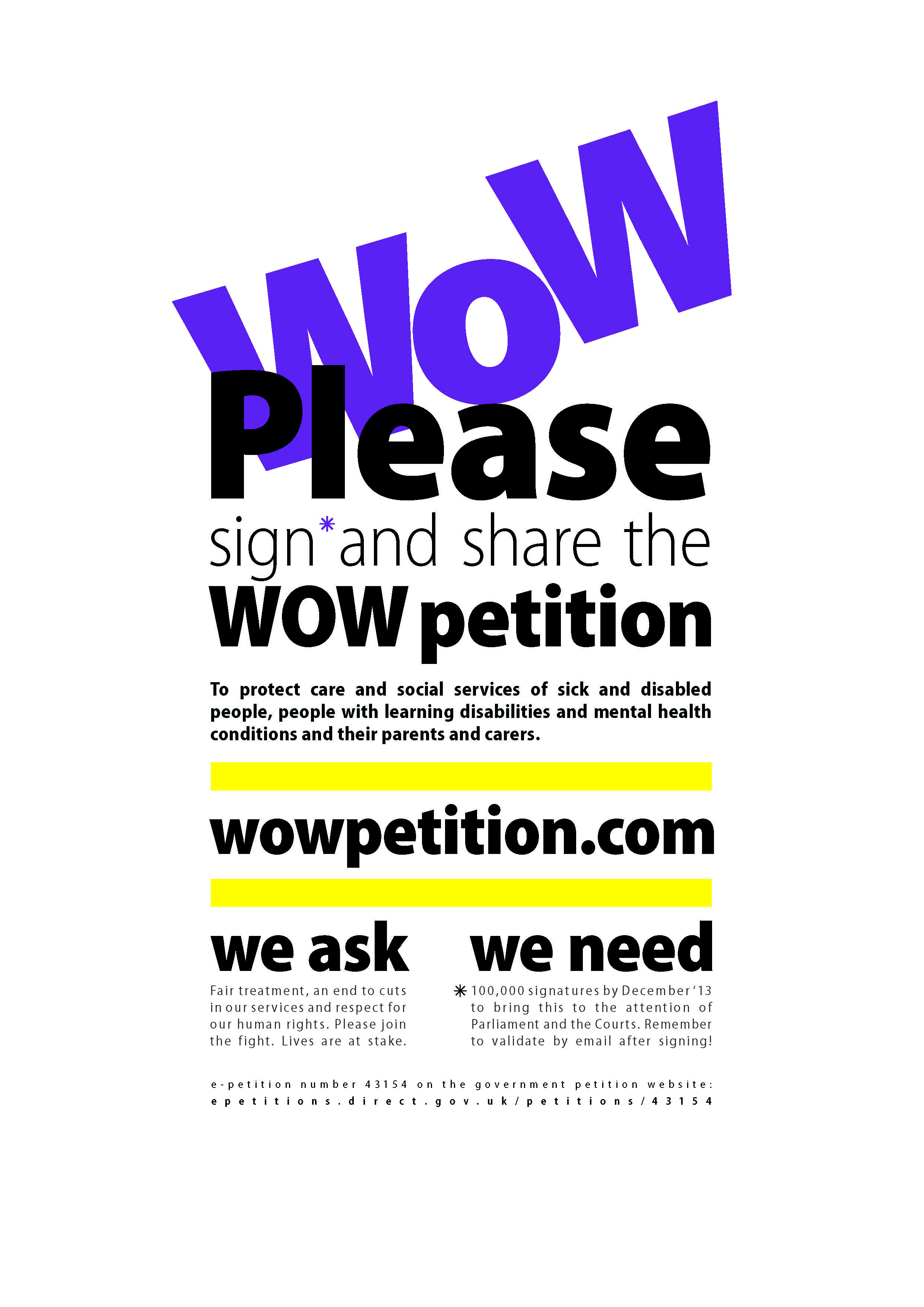
I don't know if you're already aware of the WOW petition. It was started a little over 3 months ago by comedian Francesca Martinez, and is well on target to achieve 100,000 signatures by its closing date. That means it would considered for debate in the House of Commons.


WOW stands for War on Welfare. Because frankly, that's how it does feel. Like this soulless government has declared war on those of us forced to claim welfare benefits.

Let's say you're on Disability Living Allowance, and when that gets changed over to Personal Indepencence Payment you lose out. Well OK, that's just one thing (apart from the blue badge, and Motability car, and disabled railcard, and so on that it passported it you to). Maybe you can manage without the DLA. Maybe.

But you're also on contributory Employment and Support Allowance, and you've been on it nearly a year. So that's about to stop.

And that's before we get anywhere near the changes to Council Tax Benefit, and to Housing Benefit (the Bedroom Tax).

Tens of thousands of sick disabled people are about to go under financially. And this government just doesn't give a damn. Oh, they always have a soundbite:
There's a lot of misleading stories about the impact of our welfare reforms on disabled people, which could lead to unnecessary scaremongering. Our reforms will make sure the billions we spend every year give more targeted support and better reflect today's understanding of disability. Hundreds of thousands of disabled adults and children will actually receive more support than now with the combined effect of benefit changes under universal credit.
Targeted. Some people receiving more support than now. Well, as someone pointed out to me today (thanks Eggy!) all the NHS funds don't get allocated to intensive care: support is required at all levels of need.

So, returning to the WOW petition, what it asks for (among some other things) is a cumulative impact assessment, not looking at the effect of each benefit "reform" (*spit*) separately, but how people will be affected in real life. Real people are complicated. Lots of us claim more than one benefit (partly because the system's so complex!)

When a government e-petition gets 10,000 signatures, the department responsible for it gives a reply. It's taken a while for the WOW petition's reply to turn up: I only just noticed it, and the petition has over 27,500 signatures.

To summarise the reply, it seems to be:
  • We're not avoiding you.
  • This is hard.
  • The policies haven't all been decided yet.
  • There are impact assessments for individual benefits or for all tax, benefit and expenditure changes across households, but nobody's ever done what you're asking for, which is in between.
  • Did we mention this is hard?
My reply to that would be, with the greatest possible respect (and as civil servants they would know what an insult that is!) pop down to Ryman's, buy a new scientific calculator and get on with it. These are people's lives you're messing around with (at the command of your political masters), and there is a clear case for a cumulative impact assessment to be done.

If you haven't already signed the WOW petition, would you take a look and consider signing it? The more signatures on the petition, the more pressure sympathetic MPs like Michael Meacher can put on the DWP on our behalf.

Thanks!

Edit: I'm all for avoiding unnecessary government expenditure, so I'm sure it would be fine for the DWP to use this cumulative impact assessment, which Scope and Demos have just done. It calculates that those disabled people most severely affected by the cuts will lose £4,600 each year from what are already low incomes. As Richard Hawkes the chief executive of Scope says:
At the moment there’s no place for disabled people in the Chancellor’s aspiration nation.
Sadly, that seems to be very true.

Friday, 22 March 2013

PCC reply to my complaint about Daily Mail cartoon

I complained to the Press Complaints Commission about this cartoon, which was published in the Daily Mail on 25th February 2013.

This is their reply.


Commission’s decision in the case of
Various v Daily Mail

A number of complainants expressed concern regarding a cartoon which had accompanied an article about Disability Living Allowance (DLA). The cartoon had depicted a man with a blister, saying “it’s a bad blister, but a bit of Disability Living Allowance should make it better”.

Complainants considered that the newspaper had breached Clause 1 (Accuracy) by inaccurately suggesting that DLA could be claimed on the basis of such a trivial injury. They also considered that it had been misleading to imply that people in receipt of DLA do not have genuine need for the benefits they receive.

The complainants considered that the cartoon had been discriminatory towards the disabled, in breach of Clause 12 (Discrimination). A number of complainants also said that they had found the article offensive.

The Commission considered the cartoon to have been a satirical commentary on the availability of disability benefits. Cartoons are a well-established method of newspapers making satirical comments about current affairs, and the Commission would be reluctant to compromise the ability of publications to pass commentary in this manner. Nonetheless, regardless of whether the cartoon’s message was satirical, the newspaper was required to observe the terms of the Editors’ Code of Practice. Clause 1 (Accuracy) states that “the press must take care not to publish inaccurate, misleading or distorted information, including pictures” and “the press, whilst free to be partisan, must distinguish clearly between comment, conjecture and fact”.

The Commission was satisfied that readers generally would have recognised that the cartoon expressed the robust, and even controversial, opinion of the newspaper about the general availability of disability benefits, rather than a statement of fact about the precise circumstances in which benefits can be claimed. While the cartoon had suggested that benefits are too readily available, it had not implied that everyone on DLA was receiving it unnecessarily. The newspaper had not failed to distinguish comment from fact. There was no breach of the Code.

Under Clause 12 the press must avoid prejudicial or pejorative reference to an individual’s physical or mental illness or disability and details of an individual’s physical or mental illness or disability must be avoided unless genuinely relevant to the story. The Commission made clear that Clause 12 does not cover references to groups or categories of people. The article had not made discriminatory reference towards an individual. In the absence of reference to a particular individual, the Commission did not establish a breach of Clause 12.

The Commission acknowledged that a number of complainants found the cartoon offensive; however, it made clear that the terms of the Editors’ Code of Practice do not address issues of taste and offence. The Code is designed to address the potentially competing rights of freedom of expression and other rights of individuals, such as privacy. Newspapers and magazines have editorial freedom to publish what they consider to be appropriate provided that the rights of individuals – enshrined in the terms of the Code which specifically defines and protects these rights – are not compromised.  It could not, therefore, comment on this aspect of the complaint further.


I am not satisfied with this response. Does anyone know if there are further steps I can take?

Tuesday, 19 March 2013

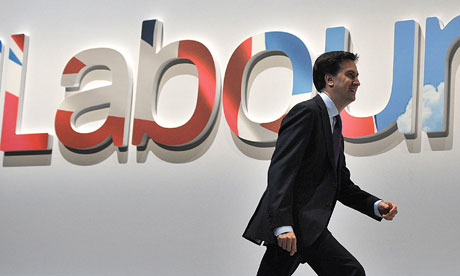
Labour doesn't represent me any more

I have voted Labour at every election since I gained my majority, and became a member of the Labour Party around 1990. I am now going to leave the party, and will not be voting for them at future elections. This is not a decision I've reached easily, so I wanted to explain some of my reasons. From conversations with other people, I know I'm not alone.

I have multiple sclerosis and other long-term conditions. I wish I was well enough to work, but I know I'm not. I don't think I'll ever work again, unless there's something I can do from home, for one or two hours each week, and entirely under my own control as and when I feel well enough.


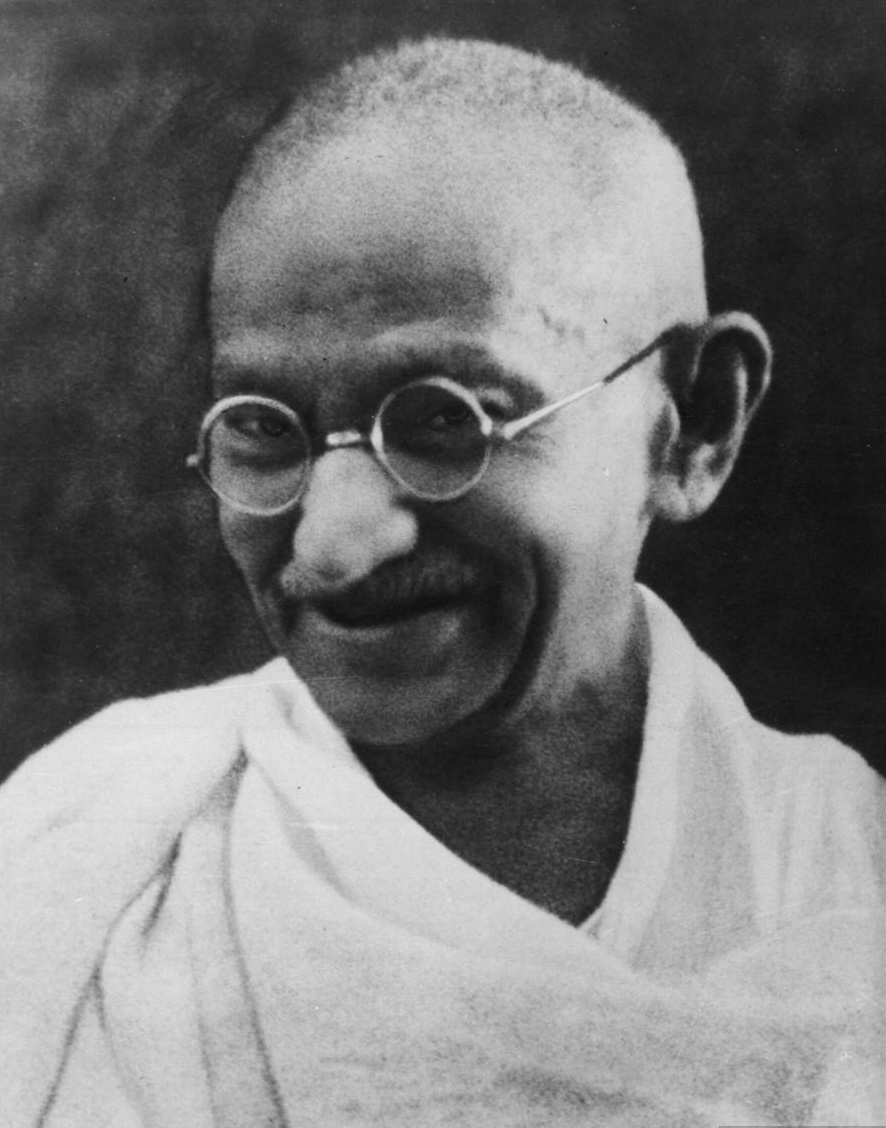
That being the case, I don't think it's extreme to expect society to provide me, and other long-term sick and disabled people, with support. After all, we consider ourselves to be a civilised country, and as Mahatma Ghandi said:
A nation's greatness is measured by how it treats its weakest members.
According to its website, the first and second values on which the Labour Party stands are social justice and strong community & social values. So Labour must agree that sick and disabled people should be supported, right?

Well...it's hard to tell, really. It was the Labour Party which awarded the contract for the unfit for purpose Work Capability Assessments to the iniquitous Atos. They have not, until recently, spoken up against the Welfare Reform Act, which has forced so many genuinely disabled people into abject poverty, and the fear of which has caused many people, sadly, to kill themselves.

Party leader Ed Milliband has relied too much on "I met a man who..." rhetoric, rather than engaging with the issues and meeting those with first-hand knowledge of living with long-term sickness and disability. Was the party trying too hard to keep the support of the middle ground, poisoned as they were by media and ConDem stories of benefit scroungers?

Through all this, and other issues (that's just the one most personal to me), I kept my faith with the Labour Party.

As I write this, the House of Commons is debating emergency legislation brought in by the government so that they don't have to pay back benefit owed to jobseekers after the Poundland workfare ruling. It seems obvious how Labour would vote in this debate. Labour, yes? It's a debate about the use of people's labour. Whether people deserve to be paid for...their labour. The Labour party came out of the whole workers' rights movement. And think back to those values: Social justice. Community and social values.

Well, the Labour Party have told their MPs to abstain.Yep, not vote at all. I mean...what?


So, Labour Party, it's not me, it's you. You walked away from me. You don't represent me any more. I'll be resigning my membership. Ironically, it looks like I'll be abstaining in future elections, as there's no other party I could bring myself to vote for.

And that's the end of me and Labour.

Sunday, 24 February 2013

The #OscarPistorius case: a fallen hero, a horror story, and sick jokes

For as long as I can remember, I've been an athletics fan. It's such a pure form of sport: who can run fastest, jump furthest or highest, throw furthest? It's competitive, but each individual is trying to beat their own personal best mark as well as the competitor in the next lane.

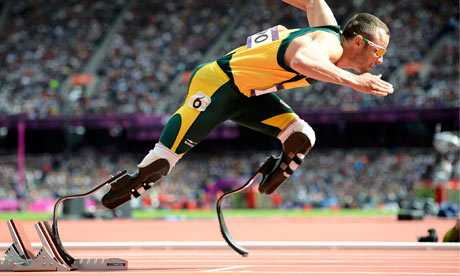
Historically, Paralympic sport has been far less prominent than mainstream, so it's been great to see South African Oscar Pistorius, the "Blade Runner", become one of the best known world sportsmen over the last few years,


Although he was already well known in Paralympic sport, his real fame came after he challenged the IAAF to be allowed to take part in mainstream events. They felt that his artificial legs gave him an advantage over able-bodied runners, claiming he had to use less energy to run with them.

After an appeal, Pistorius was cleared to run with able-bodied athletes, and in 2012 in London he became the first double amputee to compete in an Olympic Games. He also won 2 gold and one silver medal in the 2012 Paralympic Games.

It seemed that Oscar Pistorius was truly the golden boy of the Paralympics movement, and of South Africa. He was a hero to millions around the world (including me) and a role model to disabled young people. What could possibly go wrong?

Early in the morning of 14th February 2013, Oscar Pistorius shot and killed his girlfriend, model and campaigner Reeva Steenkamp. That is not in doubt. The reason for the shooting is: whether it was deliberate or accidental.

I'm not a lawyer, nor was I in the courtroom for the bail hearing, nor obviously in Pistorius's apartment. So I'll confine myself to saying that Reeva Steenkamp's life has been cut tragically short, and her family's lives blighted. And whatever happened, Pistorius will never be the same golden young man again.

Within minutes of news of the shooting appearing on sites like Twitter and Facebook, the jokes started. You would think jokes about a tragic death would be tasteless enough, but these focused on Pistorius's impairment. The same has happened with other disabled personalities, including swimmer Ellie Simmonds after last year's Paralympics.


I'm all for jokes. Humour makes the world go round. But a lot of humour is about power dynamics. As someone put it (sorry, I can't remember who), you can punch up or punch sideways, but punching down just isn't on. As a group, disabled people are less powerful than able-bodied people in society, so by making jokes about their disabilities able-bodied people are punching down.

Disablism isn't always as simple as physical attacks or direct insults against people with disabilities. And being told "Don't be daft, it's just a joke!" or "You just don't have a sense of humour!" doesn't help.

After the UK's excellent performance both in the delivery of the Olympic and Paralympic Games and in competition, it seemed possible that the legacy would include a new attitude to disabled people. On this evidence? Maybe not. We still have a long way to go.

Thursday, 31 January 2013

#Derek: self-indulgence, saccharine and disability

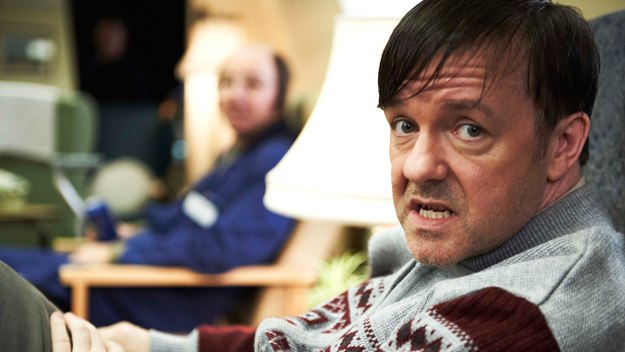
Last night saw the first in Ricky Gervais's new series Derek. I posted about the pilot when it was screened last April, and I've never made any secret of the fact that I wasn't a fan. It seemed unfair for me to dismiss the series without seeing it, though, so I watched last night. The result was many, many thoughts - and here are some of them.


It's in Gervais's customary fly-on-the-wall mockumentary style. 50 year old Derek is a volunteer helper in a care home. His best friends are manager Hannah, odd job man Dougie, and a homeless man, Kev. I couldn't quite work out the purpose of Kev. He is unpleasant, smelly, alcoholic, and sexist, and really just hangs round on the periphery. Perhaps he's meant to be the antithesis of Derek's goodness and innocence?

The first episode had perhaps the most predictable plot possible for a show set in a care home. It was threatened with closure and the characters rallied round to save it. Additionally, of course, this is a timely story, with the current social care cuts.

Channel 4 billed  Derek as as a "bittersweet comedy drama", but to me there was neither enough tension for drama nor enough laughs for a sitcom. I was annoyed by the attempts to signal what emotion we should be feeling:  the sub-Einaudi piano music to show that this was a poignant or sad moment was a prime example. At times I was in danger of dying from a saccharine overdose, such as when Hannah explained the importance of caring.

It has to be said that many people loved the programme. The tweets below are just a couple of many examples.
was an emotional rollercoaster, had me crying & laughing in 30mins. Funny, sad but true and very insightful. (Emma J Fonzarell)
Just caught up with ! Absolutely Fantastic, more comedy brilliance from :) (Lisa Marwick)
But others took issue with the accuracy of the setting:
Have you ever set foot in a care home? I know you think it's hilarious to be misinformed but come on, is lazy writing. (Bitsy)


One issue that keeps coming up is whether the character Derek is disabled. Ricky Gervais continues to insist that he's not, that he's simply naive and innocent, whereas many viewers are in little doubt that Derek has some kind of learning disability. Actor and comedian Peter Serafinowicz questioned:
Why has David Brent got Down's Syndrome? (Peter Serafinowicz)
In  possibly a direct response to criticisms of the pilot, this was raised in the programme, with "man from the council" Roger asking Derek whether he'd ever been tested for autism.
'If I'm autistic would it change me? Would it kill me? Would it make me a different person?' 'No.' 'Then leave it.'
Now that's all fine for Ricky Gervais, but in real life, a diagnosis can be hugely comforting to the parents of a child with autism. A rather glib and uninformed attempt at manipulating the emotions of the viewers.

Derek has been around since the late 1990s. Back in 2001, Ricky Gervais and Stephen Merchant discussed the character. 
"Derek," Ricky begins, "is just a nice, simple lad who sees the world differently." "Yeah," says Steve. "That's the corporate party line. Toeing the party line. The man who sees the world differently. Brilliant."
Hm.

In the end though, does it matter if Derek is disabled or not? A lot of comedy is about people doing stupid things. The problem comes when it goes beyond "mainstream" stupidity. Are we laughing at the characters or with them? In sitcoms like I'm With Stupid disabled characters are played by disabled actors, and the disabled man who originated the idea was story consultant for the series. A character with a disability being played by a non-disabled actor - particularly in a comedy - can raise questions about how accurate and sensitive their portrayal is.

And what effect will the portrayal have on public attitudes to disabled people? Comedian Stewart Lee, writing about the original YouTube videos of the character, said:
"...watching Gervais's Derek Noakes on YouTube, I imagined feral children trailing real Dereks around supermarkets, chanting "Derek Derek", as they doubtless would were the series to be made, and wondered if, sometimes, discretion is not the better part of valour." 
The evidence was on Twitter:
  try an guess who i sm ya fucking beaut!! Bet ya dnt know cause ya (Bernie Wog)
. hey man! Saw ! So glad someone is finally making a sitcom where we can laugh at retards! Classic Mate! (Alex)
And as I recounted in my previous post about Derek, I have had a group of kids shouting "Oi, Derek!" at me in the street.

I suspect what Gervais was aiming for was a version of Forrest Gump, where innocence and goodness triumph in a confusing and wicked world. Did he succeed? Not for me. It was too maudlin. Ricky Gervais can be very funny, but he needs someone - Stephen Merchant does it par excellence - to keep him from tipping over the edge into self-indulgence.

Perhaps if there's another series of Derek, the title character should be played by a disabled actor. I'd take more interest in that.

Thursday, 17 January 2013

Thousands of disabled and sick people will be hit by new ESA/WCA changes #esaSOS

On 28 January 2013 the UK government is due to make a set of changes to the Work Capability Assessment (WCA). The WCA is the flawed ‘fitness to work’ test which assesses whether sick and disabled people can get Employment and Support Allowance (ESA): a benefit designed to help and support very unwell or profoundly disabled people into work.  

Although these changes have been advertised as small ‘amendments’, they will in fact have a huge impact on the way people’s illnesses and disabilities are assessed. Many vulnerable people’s needs will suddenly be able to be overlooked or ignored, meaning they could end up losing the support they desperately need to manage their conditions.

Hundreds of thousands of sick and disabled people across Britain need your help to fight these changes!

PROBLEM 1: FALSE ASSUMPTIONS
In the fitness to work test, your needs are assessed by a ‘healthcare professional’ employed by the French private company ATOS. This assessor doesn’t just need to look at your current difficulties. For example, they can also imagine how using an aid (e.g. a wheelchair) might improve your ability to work and make a judgement based on that – without even asking your opinion!

However, soon this “imaginary test” will be able to be used for many more aids (including guide dogs and false limbs!). This means that soon thousands more people could be judged as fit to work, without being consulted, on the basis of an “imaginary” aid they don’t own or may not be able to use!

It gets worse. Even if returning to work may clearly put you at risk, these changes will mean you can still lose your disability benefit – as long as the assessor believes that trying a new therapy or treatment might reduce that risk. There’s no need for evidence that the treatment will help: you will lose support either way, making it much harder to manage if the treatment doesn’t work as hoped – let alone if it ends up making things worse.

>>> Imagine Bert, who suffers from severe schizophrenia, but is found fit to work and made to take behavioural therapy in the hope of improving his condition. He will lose his disability benefit, without the assessor having to look at several vital questions: how hard it would be for Bert to contact a psychiatrist? How long would an NHS appointment take to organize? Are there private options in his area – and could he afford them if so? What if the therapy doesn’t work, or takes a long time to adjust to? If the government’s rule changes go through, people like Bert who are desperate to work will find it nearly impossible to get an accurate assessment, affecting the quality of their support and actively preventing their efforts to get back into work <<<.  

PROBLEM 2: SEPARATING PHYSICAL AND MENTAL HEALTH
The government is also trying to change the way people’s conditions are assessed by dividing health problems into two separate boxes: ‘physical’ and ‘mental’. So, for instance, when looking at what tasks people can do, only the ‘physical half’ of the test will apply to those with physical disabilities. The same goes for the effects of treatment: for instance., if you’re taking mental health medication, only mental health side-effects will be looked at.

This completely fails to understand the way that many disabilities and illnesses can lead to both physical and mental effects. This is also the case for many common treatments: such as those for schizophrenia, Parkinson’s disease and multiple sclerosis.

>>> Think of Emily, who suffers severe, chronic pain because of nerve damage to her leg. Emily is among the 49% of chronic pain sufferers who also suffer depression as a result of continuous pain. An assessor may see Emily as able to do some work as long as she takes strong painkillers for the rest of her life, meaning she could pass the ‘fitness’ test. Yet the painkillers may not deal with the depression caused by her condition. Painkillers have also often been shown to affect people’s wakefulness and decision-making. So taking the medication may affect Emily’s ability to do a job in a completely new way – yet because these new problems are cognitive, they would not need to be looked at by the assessor when making their decision. <<<

Pretending the effects of illnesses and disabilities can be separated in this way goes against all medical practice. Going even further, and using this method to ignore sick and disabled people’s needs, is at best hopeless policy, and at worst deliberate cruelty. We cannot let the government treat some of the most vulnerable people in British society in this way.  

HOW YOU CAN HELP
The main way you can help is by spreading the message about these changes to ESA. The government have tried to sneak them under the radar – the last thing they will want is people talking about them! 
1) Email your MP (you can search by name or constituency at http://www.parliament.uk/mps-lords-and-offices/mps/);
2) Share this blog post on twitter (using the hashtag #esaSOS), Facebook and other social media. Click on the buttons below this post to share on Twitter and Facebook.
3) Email your friends and family a link to this post – or simply talk to them about it! Again, the main way we can get the government to reconsider is by getting people to talk about the injustice of these changes.So please spread the word as far and wide as you can!

Thank you so much for reading this far. Now let’s make sure these unwanted, damaging benefit changes never see the light of day!  

If you want to do more, please sign #WOWpetition and call on the government to think again.  Ask all of your friends to sign too!

The full #Spartacus briefing on the proposed changes to ESA can be found here.

Monday, 31 December 2012

Retrospective

The end of the year is traditionally a time for taking stock, so on this, the last day of 2012, I'm going to spend a while looking back. I want to summarise some of the good things that have happened as well as some of the not so good things.


  • I was proud to be involved with the dissemination of the Spartacus Report. I helped to collect supportive quotes from celebrities, posted them on here, and publicised them on Facebook and Twitter.
  • I started writing fiction! I completed a short story, the first fiction I've written since leaving school more than three decades ago. I'm still working on it, redrafting and so on, and I'm also plotting out some more. The long-term plan is that I'll build up a collection of short stories loosely themed round disability, then possibly sell them on Amazon as an e-book.
  • I organised a meal for 28 people in Birmingham, cooked by Hardeep Singh Kohli and raising funds for Shelter For The Storm.
  • I didn't blog nearly as much as I would have liked to, but most of the posts I did do were picked up for cross-posting on other websites.
  • I finished the year ranked No.7 in ebuzzing's Health Blogs.
  • My lovely cat Bing sadly died.
  • But gorgeous Kaya came to live with me instead.


  • I went to some great gigs and some excellent theatre shows.
  • I trekked down to Peckham for a lovely party at Malgosia's, and met Caroline from Poland and lots of other nice people.
  • My health wasn't that great, but I'm still breathing and still going!
  • I appreciate my "real life" and online friends more than ever. Love you all x