Showing posts with label science. Show all posts

Friday, 16 May 2014

Obstructive sleep apnoea and heart problems: the missing link?

A friend of mine died a couple of years back, of heart failure. Heart problems are very common, anid have many possible causes. He also had a condition called obstructive sleep apnoea, which has long been linked with heart problems. But nobody's ever quite known why.

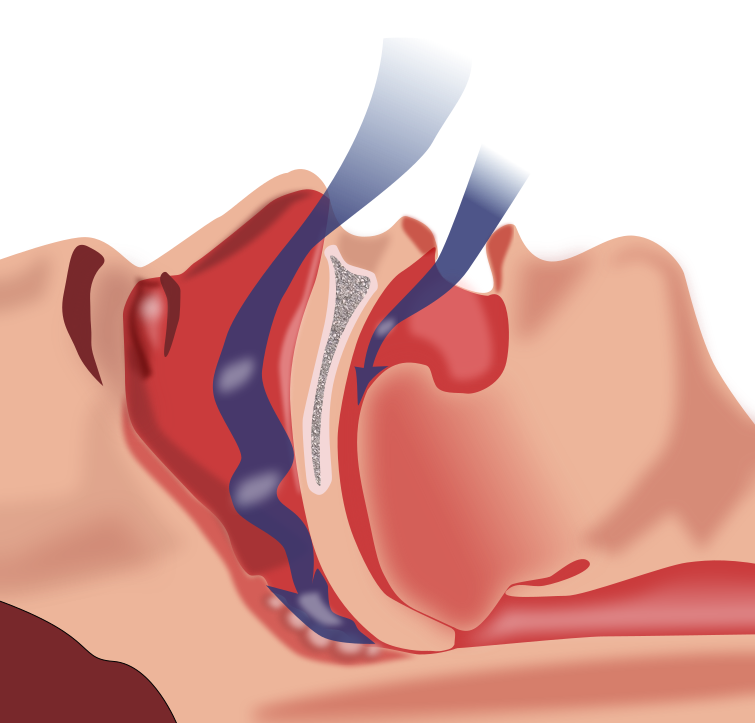
Obstructive sleep apnoea, or OSA, is surprisingly common, affecting almost a quarter of men and almost one in ten women. The muscles and soft tissues of the throat relax and collapse, blocking the airway wholly or partially and therefore interrupting breathing.


Now, for sleep to serve its purpose, we have to spend a certain amount of time in a state of deep sleep. Each time you have an episode of OSA, you enter lighter sleep or even wake very briefly in order to restore normal breathing. This cycle can repeat many times a night, up to once a minute in extreme cases.

These repeated sleep interruptions lead to the person with OSA feeling very tired during the day. They have no memory of the periods of breathlessness, so are often unaware that they are not sleeping properly.

Among the complications of OSA are heart problems: increased heart rate and blood pressure, and heart attack. The mechanism by which this happens has never been understood. Now a group of researchers at George Washington University in Washington DC seem to have uncovered it.

Our resting heart rate is maintained at an appropriately low level by a group of parasympathetic neurons in the brainstem. By mimicking OSA in rats, the researchers discovered that during OSA episodes the activity of these neurons is inhibited, leading to an increase in heart rate and the possibility of irregular heartbeat and high blood pressure.

It's too late for my friend David. But now researchers know where to focus their future work. They must try to restore the normal cardio-protective function of these neurons in people with OSA, to reduce the risk of cardiac problems, so that OSA no longer carries the risk of death.

Saturday, 25 February 2012

Life's a trial

When I'm doing research roundups, I quite often talk about clinical trials being "Phase 2" or "Phase 3". But what do these terms mean? The development of a new drug or other intervention is a long-term process. commonly taking 12 or more years before being available to patients. The regulatory process adds another hefty chunk of time.What's happening for it all to take so long?

Research begins in the laboratory, where potential treatments are tested on animals: for instance, there is a strain of mice which have a condition very like MS. Testing drugs on them gives a reasonable idea of whether they're likely to help people with MS. Around 1000 potential drugs are tested for each one that makes it to clinical trials.

The use of animals in drug trials is a whole other question, one I might discuss in a future blog post. If the drug is helpful for the animals (and how that's worked out is again a subject for a future blog post), the researchers will look for more funding to test it out on people, in clinical trials. The clinical trial process has four phases.

Phase 0 Very low doses of the drug are given to 10-15 people to see whether the drug does what was expected in humans. Tests are carried out to check what the drug does to the body, and what the body does to the drug.

Phase I The drug is tested on usually 20-100 healthy volunteers, to check that it is safe. These volunteers are normally paid, as they won't get any health benefit from participating, and are taking the risk of being given an untested drug. Some of you may remember news coverage of a Phase 1 trial in 2006 where 6 healthy volunteers became violently ill after taking a new drug.

Phase II Designed to assess how well the drug works, and what is the best dosage. Between 100 and 300 volunteer patients take either the drug or something else - the existing treatment if there is one, or a placebo.

Phase III The drug is tested on a large number of patients over a number of sites. This phase aims to be the definitive assessment of how effective the drug is, compared with any current treatments. Sometimes a manufacturer wants to prove that their drug works for other patients or other conditions than those originally established. In that case the Phase 2 or 3 trial would be the first stage.

Phase IV This is the period of surveillance once the drug is on the market. Safety continues to be checked, and technical support is available.


Clinical trials can take a long time to run. It can be difficult to recruit the number of people needed, particularly in Phase III. For many long-term conditions, it can take several months to see any effect from the drug. I recently participated in a Phase II trial for a full year.

Most Phase III trials (and some Phase II) are randomised, double-blind and controlled.
  • Randomised means that participants are randomly assigned to the treatment or placebo groups
  • Double-blind means that neither the participant nor the researchers know whether they're receiving the treatment or the placebo. It's important that the researchers don't know, as they might subconsciously behave differently to people in the two groups.
  • Controlled means that one group receives a placebo (or the existing treatment, if there is one).This means that the effect of the new drug can be isolated. Is it better than the existing treatment? If so, how much better?
  • Some trials are designed to cross-over, This means that halfway through the trial period, the participants swap over to receiving the other treatment. Those who were gettng the active drug will change onto the placebo, and vice versa.
After the trial process, the manufacturer will apply for the drug to be licensed, which has to be done separately in different parts of the globe.Here in the UK, once it's been licensed, the action then moves to an agency called NICE, who decide whether the NHS should fund treatments.


Their decisions are based on cost-effectiveness, potentially leading to some controversial outcomes. Recently they've refused funding to the new MS drug Gilenya, and there have been several decisions where funding has been refused for expensive cancer drugs which were likely to give only a few more months of life.

In some cases, local Primary Care Trusts still have to agree to fund the treatment. There have been problems recently with Sativex, which is licensed for use in MS spasticity if other treatments don't help. Many PCTs are refusing to fund it. The MS Society is campaigning on this: if you have funding for Sativex refused, they provide advice on what steps to take.

You're most likely to find out about trials through your consultant. If you'd be interested in participating in a research project (without commiting yourself to anything!) let them know.

It can't be denied that there are some risks involved, as there are with any treatment. But I found trial participation interesting, and if the drug concerned goes on to be approved I'll feel quite proud: I was part of that!

Thursday, 23 June 2011

Selecting disability, naturally

A hundred years ago or so, most of us disabled people wouldn't have had the lives we do today. I know we complain about welfare reform (and we're right to do so) but back then, we'd have been in workhouses. And that's if we were alive at all. Natural selection - evolution - might have had a word to say about our continued existence.
According to Darwin's theory of natural selection, a characteristic (let's say being taller) becomes more or less common in a population depending on whether it makes the individuals with it more reproductively successful or not. That is, if being taller means they have more offspring, the genes that gave rise to that characteristic are passed on to a larger group, and become more common. If they have fewer offspring, they don't.

All very interesting (for sad science geeks like me, anyway). But how does it relate to disability?

Many disabilities are caused, or at least influenced, by genes carried by the individuals concerned. Those genes are as controlled by the rules of natural selection as any others. If the gene for a disability means more offspring, it should become more common, along with the disability. If it means fewer offspring, it should become less common, and ultimately be eliminated from the population. "Fewer offspring" could arise through the individual dying before reproductive age.

However (predictably) it's not always quite as simple as that. Sickle cell anaemia is a genetic blood disorder where the red blood cells take on a sickle shape. This decreases the cells' flexibility and increases the risk of various complications. It occurs most commonly in people (or their descendants) from tropical or sub-tropical regions where malaria is or was common.

Sickle cell is a recessive condition: that is, both parents have to be carriers, and the child has to inherit a copy of the sickle cell gene from each of them. Being a carrier (known as "sickle cell trait") appears to give some protection against malaria. So natural selection seems to have provided a play-off between the parents having protection against malaria, and each of their children having a one in four chance of developing sickle cell disease with its severe complications and likelihood of dying young.

Kin selection is a theory explaining why individuals behave in ways that favour their relatives rather than themselves, even at a cost to their own survival and/or reproduction. The classic example is a beehive, where asexual drones work for the benefit of the all-powerful queen bee. The kin selection theory states that they do this in order to help pass on the queen's genes, which are so close to their own.

People with genes that lead to disability are part of a family. Whether or not they have progeny themselves, others in their family are likely to - and the genes for the disability are quite possibly hidden in their genomes too. As families support each other, they make it more likely that their genes, including "defective" ones, will be passed on.

And, of course, disabled people make many contributions to the humanity-hive. In paid or voluntary work; as children, siblings, lovers, spouses, and parents; as employers (or the reason people are employed); and as friends, giving emotional support. I'm sure you can think of many more.

The genes that code for disabilities may not always be helpful. But I don't think evolution will be eliminating them just yet. Factors like carrier status being beneficial, and kin selection, mean they are neutral at worst in their effect.

Friday, 13 May 2011

It wasn't my intention...

...to do an accessibility audit of a hotel, two taxis and a theatre in Cambridge. That's kind of how it worked out though.

The purpose of the trip, and the best bit, was seeing Uncaged Monkeys. Hard to explain, but imagine a particle physicist (Brian Cox), a mathematician (Simon Singh), an epidemiologist (Ben Goldacre) and a comedian (Robin Ince) talking about science and cracking jokes...it were right good. Nerdgasms all round the theatre!
So the actual show was great - but one way and another, there were a lot of complications to do with travelling and accommodation.

I drove to Cambridge. I was staying overnight in the Holiday Inn Express, Cambridge, where I'd booked an accessible room. Now tell me: if you were designing a hotel, which floor would you put the accessible rooms on? You know, the rooms for people with mobility problems? People who maybe can't manage stairs too well? Yes that's right! The 1st and 2nd floors! Which is clearly a particularly excellent piece of planning when the lift has broken down, as it had.

Now, I need to stress here that the staff could not have been more helpful than they were. They very swiftly allocated me to a standard room on the ground floor. Since it emerged that I couldn't actually get into the room in my wheelchair due to the layout, one of them even came along and propped the second bed on its end against the wall, giving me lots more room to move around. Nice, friendly people.

Also, the tables in the restaurant area were high enough to get the control pod of my power wheelchair underneath. No small thing, I can promise you, having dropped many a hot meal into my groin before now because I couldn't get anywhere near the table. Plenty of room to maneouvre round the room, and attentive but not irritatingly so staff.

So, while I can't comment on the accessible rooms (not having been in one), the hotel in general gets a thumbs up. The dining room (where you also have breakfast) is very accessible, and I found the staff extremely friendly and helpful.

Next...the saga of the taxis.

I asked the hotel to book me a wheelchair accessible taxi, to take me to the theatre, and in due course one arrived. The driver clearly didn't use his wheelchair ramps all that often, though...

He eventually managed to get them extended (fully extended, at my request) and attached to the taxi. But my wheelchair is a bit idiosyncratic. The front wheels are very close together.

In "channel ramps", like this, it can be impossible to get the ramps placed so that they're both close enough together for my front wheels, and far enough apart for my back wheels. It depends on the width of the channels. This taxi had channel ramps. Narrow ones. We just about managed to get the chair into the taxi, but at the other end it was impossible for me (going backwards, with the taxi driver out of sight behind me yelling "This way!" and randomly grabbing the chair handles) to get the wheels lined up right. Eventually, the taxi driver and a nice passerby had to lift the chair out, and I had to clamber down the stairs. Fortunate I could, really.
Once I was on level ground again, I phoned the cab company. I explained that I'd like to use their company again to get home: as a visitor to Cambridge, I didn't know any others. But I needed their assurance that in the late evening, there would be a cab on with a one-part ramp (like the one above). After some muttering and clicking of keys, I was promised there would be. After the show, I duly phoned up. I know you know what's coming...no cabs with one-part ramps.

So, after I had a little shout at them, they gave me the number of another cab company. They turned up within about 5 minutes, which was not at all bad. And the cab did indeed have a one-part ramp. Unfortunately it was also rather short, and the street had a ferocious camber. Meaning that if I'd gone up the ramp where he initially parked, my head would have been touching the tarmac. Probably not a good plan...

And finally in this little roundup of Cantabrigian accessibility, the theatre - the Cambridge Corn Exchange. It's an old building externally, which has clearly been very extensively adapted and modernised internally, and seems generally very accessible. I was in a box right next to the stage, with a great view. Three things I noticed...
  1. Once you're in the disabled loo, it's impossible to close the door without turning right round, going half way out again, grabbing the door handle, and reversing back. When I went, another theatre-goer spotted my predicament and closed the door for me - but you don't necessarily want to broadcast to the entire foyer that you're going to the toilet, y'know?
  2. The "sill" into the box is quite high, considering it's meant to be level. The other wheelchair user in the same box as me had a manual chair, and I could see he was having a bit of a struggle with it at times.
  3. The lift is one of those irritating ones where you have to hold the button all the time you're in there. All well and good, as long as you have the hand strength to do that, and as long as you can twist round in your seat to do it.

Oh and by the way. Motorway services having the disabled loos right at the furthest corner away from the entry door. What's that all about?